
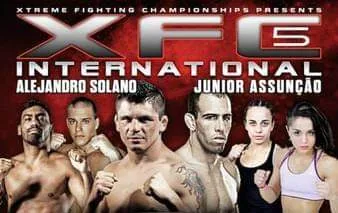
Relive XFC International 2 From The Vault
The XFC International series was the promotion's Latin American project: a tournament and super-fight format built for television, launched after the organisation signed a partnership with one of the region's largest open broadcasters. Revisiting the second instalment of that series is a useful way to understand how the promotion used the vault, because the format mattered as much as any single result on the night.
What the international series was
In the winter of 2013 the promotion announced a partnership with Rede TV!, one of the largest open television broadcasters in Latin America. The following year it launched its first International Tournament and Super-Fight Series in the region, and the company has said that series shattered all of its prior network ratings. That combination of free-to-air reach and tournament structure is what made the international events commercially significant.
The format followed the promotion's broader model of running brackets alongside standalone superfights. A tournament supplies a narrative that builds across several events, while a superfight gives a single night a headline bout that does not depend on a bracket being at a particular stage. Putting the two together on one card is how a promotion keeps an audience engaged between rounds.

Why the vault exists
A promotion that produced a large number of televised events accumulates a library, and that library becomes an asset rather than a pile of tapes. Fighters use it to study opponents and to show their own work to prospective promoters, while broadcasters use it to fill schedules and the promotion uses it to introduce a new audience to athletes it expects to feature again.
- Archived events promote fighters who are still on the roster.
- Old cards supply content for television re-runs and streaming.
- The vault lets matchmakers compare a fighter's past and present form.
- Historic footage gives a new audience a way into the promotion's identity.
How a tournament card is structured
A tournament event is built around progression rather than around a single result, which changes how a card is ordered and how a promotion talks about it. The table below describes the general anatomy of an international tournament card in the way the promotion has used the format, including the superfight that typically sits above the bracket.
| Card position | Type of bout | Function |
|---|---|---|
| Main event | Superfight | Headline attraction independent of the bracket |
| Co-main | Tournament final or semifinal | Decides who advances |
| Main card | Quarterfinal or season bout | Builds the bracket |
| Prelims | Development bouts | Introduces new athletes |
| Show | Interviews and features | Explains the bracket to viewers |
The fighters the series introduced
The value of an international series to a promotion is ultimately the athletes it produces. The XFC's Latin American events introduced fighters who went on to appear repeatedly in its vault exports, including names such as Guilherme Faria, Carlston Harris, Natan Schulte and Poliana Botelho, all of whom featured in highlighted bouts and weekly features distributed by the promotion.
A promotion that develops fighters in its own series can present them as its own discoveries, which is a stronger marketing position than buying athletes who are already known. That is why the international project was described in the company's own history as a cornerstone of its growth rather than as a one-off foray into a new market.
What the vault tells you about the promotion
Looking back through an old series is more revealing than a modern highlight reel, because it shows how the promotion presented itself when it was building rather than when it was established. The look of the Hexagon, the way bouts were introduced and the features that were produced each week all reflect the identity the organisation was trying to establish in that period.
Those archive events remain part of the promotion's public record, and this site collects them alongside current material. For the way the organisation describes the international project in its own words, see the About XFC page, and for current events see the Schedule.
How a broadcast partnership shapes a series
An international series only exists if a broadcaster is willing to carry it, which means the format is designed around a partner as much as around the sport. Episode length, the number of events per season and the balance between tournament bouts and standalone fights are all shaped by what a network can schedule and when its audience is available.
That can be an advantage over a promotion's domestic calendar. A partner with a large free-to-air audience delivers viewers a subscription service cannot reach, and in a market where the sport is still growing that reach is worth more than the rights fee. It is why the series was launched alongside a partnership rather than before one.