
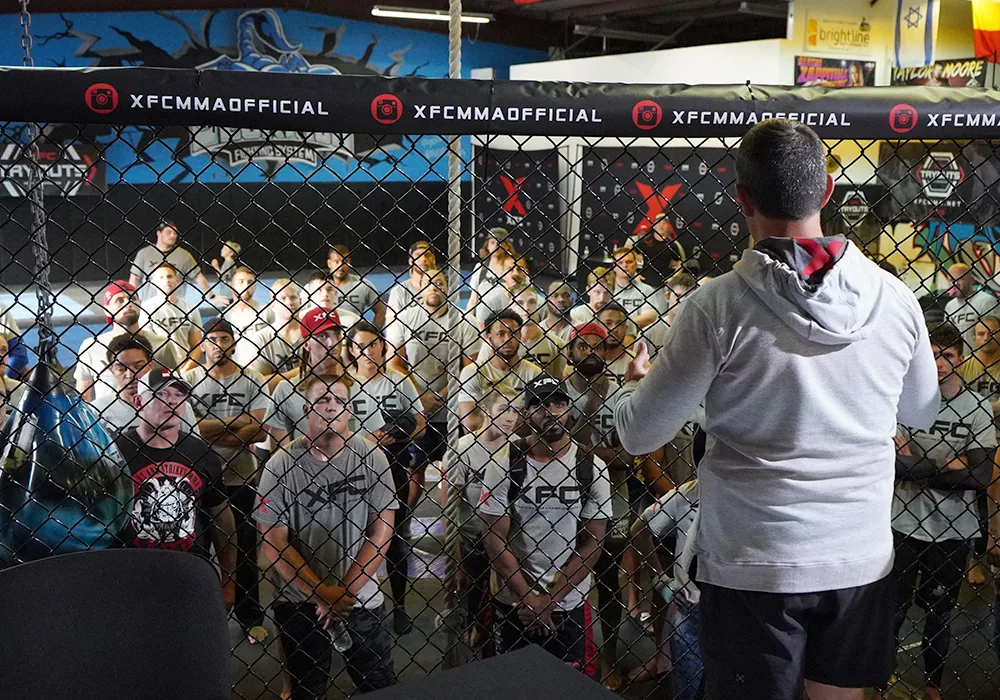
The Best XFC International 5 Action From The Vault
The fifth instalment of the XFC International series produced finishes that the promotion was still using in its weekly features years later, which is the clearest measure of how much a single card can contribute to a promotion's library. Revisiting it means looking at two different things at once: the bouts themselves and the format that made them easy to present to a television audience.
The weekly features that kept the series visible
One of the ways the promotion extended the life of its international events was through short weekly segments. Its archive lists features such as a submission of the week, a hit of the week and an interview series under the X-Ray banner, each tied to a fighter who had appeared on a recent card. The approach turns a single event into several weeks of content.
For a promotion running a tournament, that is more than efficient production. Each weekly segment reintroduces the athletes in the bracket, so viewers who missed an event can pick up the thread, and fighters gain name recognition between cards without having to fight more often than their bodies allow.

The names that came through the series
The promotional archive names the athletes who carried the international cards. James Gray and Lucas Moraes featured in an instalment of the series, Michel Pereira met Geraldo Coelho at another, and Guilherme Faria and Carlos Torres were matched in a season-two featherweight tournament quarterfinal. Juliana Werner and Iryna Shaparenko appeared in a bout that produced a submission-of-the-week feature.
Several of those athletes went on to careers beyond the promotion, which is the intended outcome of a development series. A promotion that introduces fighters and then watches them progress elsewhere still benefits, because the archive remains evidence that the organisation can identify talent early.
What made a finish memorable
Not every knockout or submission becomes a clip that a promotion reuses for years. The ones that do tend to combine a clear technical action with a visible result: a strike that lands cleanly enough to be understood on first viewing, or a submission applied so precisely that the mechanics are obvious even to a new viewer. That is what makes a highlight usable outside the original broadcast.
- A finish that reads clearly to a first-time viewer.
- A bout with something at stake in the bracket or the division.
- A result that changed how the fighter was matched afterwards.
- Footage with enough camera coverage to be re-cut for features.
How the promotion packaged an international card
Broadcasting a tournament to a mass audience requires a presentation that explains itself, and the table below summarises how the international shows were assembled. Each element exists to keep a viewer who has not seen the previous event oriented inside the bracket.
| Element | Purpose | Benefit to the viewer |
|---|---|---|
| Bracket graphics | Show who has advanced | Context for every bout |
| Weekly features | Keep athletes visible | Recognition between cards |
| Interviews | Explain the fighter's situation | A reason to care about the bout |
| Replay packages | Recap previous rounds | Continuity across events |
| Localised commentary | Reach the home audience | Familiarity and access |
Why the vault still matters
A library of finished events is working capital for a sports promotion. It can be re-cut into features, used to introduce returning fighters, licensed to broadcasters filling a schedule and shown to a new audience that was not watching when the bout first aired. The XFC has consistently treated the vault as an asset rather than as an archive of nostalgia.
That is also why the promotion's own descriptions of these events matter more than any retrospective. Bouts named in the archive are recorded here as the promotion published them, and footage and features remain available through the promotion's own channels. The Video Vault collects the current selection.
Why finishes travel further than decisions
A highlight has to work without context, which is why finishes dominate promotional material. A knockout or a submission can be understood by a viewer who has never seen either fighter and does not know what is at stake, and it can be cut to a few seconds and used in the marketing of an entirely different event months later.
Decisions do not travel in the same way, but they matter just as much to the fighters involved. A five-round win over a ranked opponent builds a career more reliably than a highlight finish against a weaker one, which is why the promotion's weekly features also covered technical submissions and interviews alongside the hits.
Archive events also let a promotion measure itself honestly. Looking back at a card from an earlier season shows which production choices aged well and which did not, and a library that is genuinely watched is a better guide to what an audience responds to than any amount of planning.